Sodium Hydroxide (Caustic Soda)
Buy Bulk Sodium Hydroxide (Caustic Soda) at wholesale prices in Pakistan. Trusted supplier & Distributor for soap bases and cosmetics manufacturing.
Product Specification:
| Product Name | Origin | Shelf Life | Usage |
|---|---|---|---|
| Sodium Hydroxide Caustic Soda | China | 2 years | Soap-making, detergents, cleaning agents |
Specifications
Description
Wholesale Sodium Hydroxide for Soap Bases – High-Quality Bulk Supply in Pakistan
Sodium Hydroxide, commonly known as Caustic Soda, is a pivotal ingredient in the cosmetics industry, especially in the production of soap bases. Its unique chemical properties facilitate the saponification process, transforming fats and oils into soap—a fundamental reaction in soap manufacturing. As a leading supplier of high-quality raw materials, we offer premium Sodium Hydroxide tailored to meet the stringent demands of cosmetic manufacturers in Pakistan.
Overview of Sodium Hydroxide in Cosmetics Manufacturing
Sodium Hydroxide (NaOH) is a highly caustic alkali, integral to various industrial applications, notably in cosmetics. In soap making, it acts as a catalyst in saponification, reacting with triglycerides to produce glycerol and fatty acid salts—the primary constituents of soap. This reaction not only yields soap but also determines its texture, hardness, and cleansing efficacy. The quality of Sodium Hydroxide used directly influences the final product’s quality, making it essential for manufacturers to source it from reputable suppliers.
Benefits of Sodium Hydroxide in Soap Bases
- Efficient Saponification: Sodium Hydroxide ensures complete saponification, leading to a consistent and high-quality soap product.
- Enhanced Texture and Hardness: It contributes to the soap’s firmness, ensuring durability and longevity during use.
- Superior Cleansing Properties: Soaps derived from Sodium Hydroxide effectively remove dirt and oils, providing a thorough cleansing experience.
- Versatility: Suitable for various soap formulations, including bar soaps and specialty soaps, offering flexibility in product development.
Applications in Cosmetics Manufacturing
- Bar Soap Production: Sodium Hydroxide is essential in crafting solid soap bars, providing the necessary alkalinity for saponification.
- Liquid Soaps: While Potassium Hydroxide is typically used for liquid soaps, Sodium Hydroxide can be combined to achieve desired consistency and properties.
- Shampoo Bars: Utilized in solid shampoo formulations, offering an eco-friendly alternative to liquid shampoos.
- Shaving Soaps: Provides the creamy lather and stability required in shaving soap products.
Why Choose Our Sodium Hydroxide?
- High Purity: Our Caustic Soda boasts a purity level of 99.5%, ensuring minimal impurities and optimal performance in formulations.
- Consistent Quality: Sourced from reputable manufacturers, we guarantee uniformity in every batch, aiding in consistent product outcomes.
- Competitive Pricing: We offer bulk quantities at wholesale prices, providing cost-effective solutions for manufacturers.
- Reliable Supply Chain: With a robust distribution network across Pakistan, we ensure timely delivery to meet your production schedules.
Manufacturers’ Guide: Best Practices for Using Sodium Hydroxide
- Safety First: Always handle Caustic Soda with appropriate personal protective equipment, including gloves and eye protection, due to its caustic nature.
- Accurate Measurements: Utilize precise weighing equipment to ensure the correct ratio of Caustic Soda to oils, crucial for successful saponification.
- Controlled Environment: Conduct the mixing process in a well-ventilated area to safely disperse any fumes generated during the reaction.
- Proper Storage: Store Caustic Soda in airtight containers to prevent moisture absorption, which can affect its efficacy.
- Quality Oils: Pair with high-quality oils and fats to produce superior soap products, as the quality of raw materials directly impacts the final product.
Complementary Products for Soap Bases
- Coconut Oil: Enhances lather and moisturizing properties in soaps.
- Shea Butter: Adds creaminess and skin-nourishing benefits to soap formulations.
- Essential Oils: Provides natural fragrances and additional therapeutic properties to soaps.
Conclusion and Call to Action
Incorporating high-quality Caustic Soda into your soap manufacturing process is crucial for producing superior products that meet consumer expectations. Partner with us to access top-grade Caustic Soda at competitive prices in Pakistan. Contact us today to place your order or to learn more about how our products can enhance your cosmetic formulations.
Specifications
- Name: Sodium Hydroxide
- Origin: China
- Shelf Life: 2 years
- Usage: Saponification, Neutralization, Cleaning
By adhering to these guidelines, you can effectively utilize Caustic Soda in your soap manufacturing processes, ensuring high-quality end products that satisfy your customers’ needs.
Sodium Hydroxide
Sodium Hydroxide: An Overview
Sodium Hydroxide, also known by its chemical formula NaOH, is a white, odorless solid widely utilized in various industries. Frequently found in household cleaning agents — particularly those formulated for unclogging drains and cleaning ovens — Sodium Hydroxide is highly caustic and can cause severe burns if it comes into contact with skin. Ingestion of this substance can result in serious, irreversible harm. Despite its hazardous nature, Sodium Hydroxide has been approved by the FDA and is classified as “generally recognized as safe” (GRAS) when used appropriately. Its versatility makes it valuable in numerous sectors, including textile manufacturing, soap and detergent production, paper making, aluminum refining, petroleum processing, and the manufacture of bleach.
Sodium Hydroxide in Beauty Products
Sodium hydroxide, when used at low concentrations (typically around 5%), is a common ingredient in a wide range of beauty and personal care products. Some examples include:
– Hairsprays
– Perfumes and fragrances
– Soap (especially in soapmaking)
– Foot powders
– Hair dyes
– Cosmetic makeup
– Nail care formulas
– Shampoos
– Shaving creams and gels
– Hair removal (depilatory) products
– Suntan oils
– Chemical hair straighteners
Sodium hydroxide is primarily added to these products due to its role as a pH stabilizer. By helping to maintain an optimal pH balance, sodium hydroxide ensures that hair, scalp, and skin remain in a less acidic state. This stabilization prevents external factors — such as oils transferred from hands during product application — from disrupting the intended pH level of the product. As a result, sodium hydroxide plays an important part in preserving the effectiveness and safety of many beauty formulations.
Sodium Hydroxide: Applications and Industrial Uses
Sodium hydroxide, a widely used strong base, plays a vital role in numerous industries due to its versatility. One of its primary applications is as a pH regulator, where it effectively neutralizes acidic solutions.
In addition to pH adjustment, sodium hydroxide reacts with weak acids such as hydrogen sulfide present on various substrates. This reaction produces sodium salts, which can be readily separated and removed from the mixture. This technique, known as caustic washing, is frequently employed to eliminate sulfur-containing impurities from substances like crude oil.
Beyond its function as a pH regulator, sodium hydroxide serves many other purposes, underscoring its importance in industrial processes.
Additional Applications of Sodium Hydroxide
Sodium hydroxide is a versatile compound with a broad spectrum of industrial and practical uses:
– In the energy industry, sodium hydroxide plays a role in the manufacture of fuel cells.
– The pharmaceutical sector utilizes sodium hydroxide in the production of numerous medications, ranging from over-the-counter painkillers to anticoagulants and cholesterol-lowering drugs.
– Water treatment plants employ sodium hydroxide to regulate pH levels and maintain optimal water acidity.
– During the refining of aluminum ore, sodium hydroxide is essential for extracting alumina from bauxite and other minerals.
– It serves as a key reagent for both esterification and transesterification reactions, processes fundamental to the creation of soap and biodiesel.
– Sodium hydroxide is also used in tissue digestion, where it breaks down organic matter by dissolving soft tissue. This application is commonly found in the disposal of animal remains, such as roadkill, though it has also been infamously misused by criminals for the illicit disposal of human bodies.
When Sodium Hydroxide enters the environment
it behaves differently depending on where it is released. In the air, Sodium Hydroxide reacts quickly with other substances, causing it to break down. If it is released into water, Sodium Hydroxide dissociates into sodium ions (positively charged) and hydroxide ions (negatively charged), which leads to a reduction in the water’s acidity. When Sodium Hydroxide comes into contact with soil that contains moisture, it also separates into sodium and hydroxide ions. Importantly, Sodium Hydroxide does not bioaccumulate or build up within the food chain.
Get in touch with us today!
If you require custom chemicals, including Sodium Hydroxide, please follow this link.
For any inquiries or if you have concerns, you can reach us here.
🌿 Benefits & Uses
🌿 Benefits & Uses
Health & Wellness Benefits
Sodium Hydroxide (NaOH)—commonly called caustic soda—is a strong alkali used as a processing and pH-adjusting agent in regulated amounts. It is not a nutritional or botanical “active,” but it is essential for making skin-friendly soaps via saponification, where NaOH reacts with oils/fats to form soap and glycerin. When you formulate correctly and cure fully, the finished bar contains no free lye, delivering gentle cleansing.
-
Scientifically backed cosmetic role: NaOH enables stoichiometric conversion of fatty acids into mild surfactants (soap). In gels/cleansers, micro-quantities neutralize carbomers and fine-tune pH for stability and performance.
-
Traditional/historical context: Alkaline lye solutions derived from ash were historically used to produce household soaps across cultures; modern controlled membrane-cell NaOH offers consistency and purity.
-
Mechanism of action: As a strong base, NaOH elevates pH and reacts with triglycerides to create soap salts; the resulting finished product lifts oils/impurities during washing.
-
Skin, hair & cosmetic benefits (via finished product):
-
Properly superfatted cold-process and hot-process soaps cleanse without harshness and retain natural glycerin.
-
Shaving soaps gain dense, stable lather and glide.
-
Accurate pH adjustment in rinse-off systems enhances formula stability.
-
-
What isn’t it: NaOH is not anti-inflammatory/antioxidant by itself; any comfort/conditioning comes from your oil phase (e.g., shea butter, jojoba oil) and additives in the finished product.
-
Pakistan context: Climate-responsive recipes (lower water, higher ventilation while curing) can help bars resist sweating and softness in warmer cities.
Target keywords: “sodium hydroxide benefits”, “caustic soda uses”, “lye for soap making Pakistan”
Practical Applications & Uses
Cosmetics & Personal Care
-
Cold/Hot Process Bar Soap: Typical lye solution strength 28–35%, with 5–8% superfat based on oil profile and Pakistani climate.
-
Liquid Soap: Often primarily KOH; NaOH may be 0–20% of total alkalinity for clarity/feel—see Potassium Hydroxide (KOH) Flakes.
-
pH Adjustment: Trace amounts to neutralize carbomer or tune pH in gels/cleansers—professional use only.
Food & Beverage (food-grade only)
Processing aid in pretzels/alkaline noodles/olive debittering under strict standards. Use food-grade NaOH and validated SOPs.
Pharmaceutical/Nutraceutical (industrial)
Used for pH control, clean-in-place (CIP), and certain synthesis steps—follow GMP and full neutralization/rinse protocols.
Home & DIY
-
Soap making with digital scale + SAP calculations; always wear PPE.
-
For household drains, use only labeled drain products; the NaOH offered on this page is intended for formulation: Sodium Hydroxide (Caustic Soda) product page.
Aromatherapy/Traditional
Not an aromatic; any “lye soap” comfort comes from oils/additives such as butters and carrier oils.
Industry-Specific Applications
Manufacturing/Industrial
-
Toilet & laundry bar soap, liquid soap bases, and detergent intermediates.
-
Textile scouring/mercerizing (industrial grade), paper pulping, biodiesel catalysis.
Recommended Concentrations (cosmetic context)
-
Bar Soap: Lye solution 28–35%; superfat 5–8%.
-
Liquid Soap: Blend with KOH; NaOH share 0–20% depending on clarity/viscosity targets.
-
Gel/Cleanser pH: Add dropwise to target pH (often 5.5–6.5 for rinse-off). Lab-only.
Compatibility & Stability
-
Avoid aluminum/zinc; choose HDPE/PP or stainless steel.
-
Thermal note: Always add NaOH to water—exothermic spike can hit 70–90°C; cool before combining with oils.
-
Synergies: Harder bars with stearic-rich oils; better performance with chelators; conditioning via superfatting oils like shea butter.
Meta (tab): Sodium hydroxide (caustic soda) benefits & uses for soap making, pH adjustment, and industry in Pakistan. B2B & DIY guidance with safe percentages.
⚠️ Side Effects
⚠️ Side Effects
Common Side Effects
Improper handling may cause skin/eye irritation, dryness, or stinging, especially with splashes of dilute solutions. With PPE (gloves/goggles), such effects are uncommon. Onset is usually immediate to minutes after exposure, resolving in hours to 1–2 days once rinsed and moisturized.
Minor management:
-
Rinse skin with cool running water (15 minutes); remove contaminated clothing.
-
For eyes, flush 15–20 minutes and seek medical advice.
-
Apply bland emollient to dry skin afterwards.
Properly cured soap contains no free NaOH and is generally safe for normal use.
Serious Side Effects & Warnings
Rare but serious: chemical burns, corneal injury, respiratory irritation from dust/mist, or ingestion. Get immediate medical help for severe pain/blistering, eye pain/vision changes, breathing difficulty, or any swallowing incident (do not induce vomiting). Stop handling if strong irritation, cough, dizziness, or eye discomfort occurs. Keep emergency numbers handy and provide batch/product info.
Risk Factors & Individual Sensitivity
Higher risk: sensitive/compromised skin, dermatitis, asthma/COPD, contact lens wearers. Children/elderly are more vulnerable to accidental exposure. Always patch-test finished soaps before broad distribution.
Disclaimer: Educational only—consult a healthcare professional for medical advice. For COA/SDS or technical help, Contact Us.
Meta (tab): Sodium hydroxide side effects: symptoms, first aid, and when to seek help (Pakistan).
Precautions & Interactions
Precautions & Interactions
General Precautions
-
For trained users with PPE only (gloves, goggles/face shield, apron).
-
Pregnancy/Breastfeeding: Minimize exposure; delegate where possible; strict PPE and ventilation if handling.
-
Children/Elderly: Keep locked away; no involvement in handling.
-
Health conditions: Extra caution with asthma/COPD, eczema/dermatitis, or ocular issues.
-
Allergy/Sensitivity: Not a classic allergen but can irritate—wash immediately after accidental contact.
-
Clear labels; never store in food/drink bottles.
Drug & Supplement Interactions
NaOH isn’t taken as a medicine, so “interactions” are chemical:
-
Acids (citric/acetic/HCl): Heat-releasing neutralization—combine slowly with cooling.
-
Ammonium compounds / Chlorine bleach: Avoid dangerous mixtures—may release irritant gases.
-
Reactive metals (Al/Zn): Corrosive; can release hydrogen gas.
-
Production timing: Adjust/neutralize at the end per SOP. Keep detailed batch records for traceability.
-
If accidental exposure occurs while on sensitive meds (e.g., anticoagulants), seek medical advice due to tissue injury risk.
For sourcing, specs, or safety queries, message us via Contact Us.
Handling & Storage Safety
-
Rule #1: Always add NaOH to water, never water to NaOH.
-
Mix in HDPE/PP or stainless; avoid aluminum. Work in ventilation.
-
Storage: Cool, dry, tightly sealed to limit CO₂ uptake (prevents sodium carbonate formation).
-
Contamination control: Dedicated tools; keep away from acids and food.
-
First aid: Skin/eye → flush 15–20 min; get medical care for burns/eye exposures.
-
Disposal: Neutralize and dispose per local rules.
Meta (tab): Sodium hydroxide precautions & interactions: PPE, storage, compatibility, first aid for Pakistan formulators.
Dosing & Instructions
Dosing & Instructions
Dosage Guidelines
-
Bar Soap: Prepare 28–35% lye solution (e.g., 300–350 g NaOH per 1 L water—adjust per formula). Weigh with a digital scale using accurate SAP values. Aim 5–8% superfat for warm Pakistan climates.
-
Liquid Soap: Primarily KOH; NaOH may be 0–20% of total alkalinity for specific feel/clarity—see KOH Flakes.
-
pH Tuning (Gels/Cleansers): Add dropwise to reach target (often pH 5.5–6.5 for rinse-off). Lab use only.
-
Maximums: Never exceed stoichiometric needs—free lye in finished product is unsafe. New makers should start on the lower lye concentration end.
Application Methods
-
Never apply NaOH to skin.
-
Solution Prep: Use distilled water. Slowly add NaOH to water, stir to dissolve; solution heats up—cool to 30–40°C before combining with oils.
-
Mixing: Use HDPE/PP jug, thermometer, immersion blender; pulse to reach trace.
-
Superfat & Additives: Enhance mildness with Refined Shea Butter or Jojoba Oil. For water-containing products (not pure bar soap), review preservatives in Acids/Preservatives category as applicable to your system.
-
Temperature Tips for Pakistan: In hot months, mix at 30–35°C to control acceleration.
Timing, Frequency & Monitoring
-
Best time: Cooler hours (morning/evening).
-
Frequency: As per production schedule (this is an industrial input, not a topical).
-
Cure: 4–6 weeks (cold process). Hot process still benefits from 1–2 weeks rest.
-
Monitor: Finished soap pH, absence of “zap,” hardness, lather, and user comfort. If pH is high/irritating, rebatch or discard.
-
For help, message Contact Us.
Meta (tab): How to use sodium hydroxide safely: Pakistan-specific soap percentages, mixing steps, curing timelines.
🌿 Ingredients & Specifications
🌿 Ingredients & Specifications
Active Ingredients & Composition
-
INCI/Chemical: Sodium Hydroxide (NaOH) | CAS: 1310-73-2
-
Typical Composition: ≥98–99% NaOH (cosmetic/technical grades), with trace Na₂CO₃/NaCl/H₂O depending on grade and storage.
-
Function: Strong alkali for saponification and pH adjustment.
-
Additives: None added for cosmetic grade (confirm per batch). For orders/specs, see Contact Us.
Technical Specifications
-
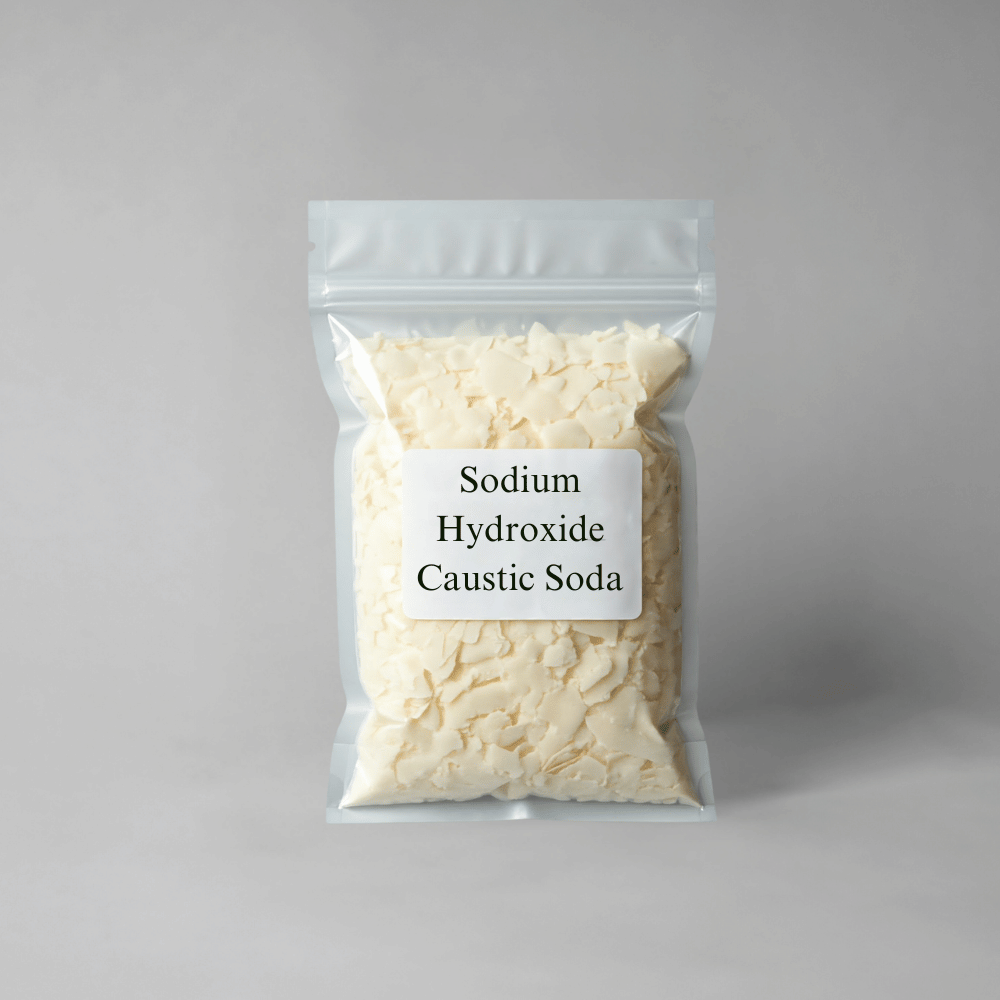
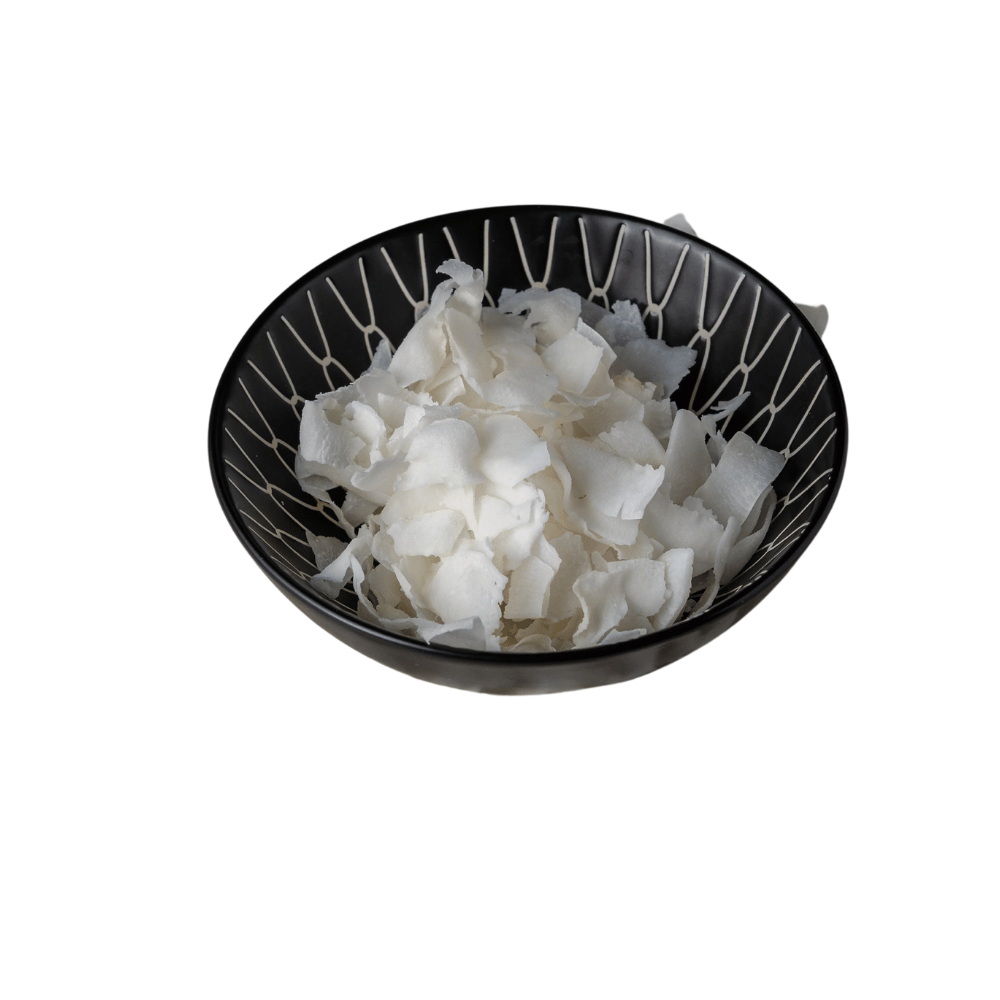
Appearance: White, odorless pellets/flakes
-
Purity: ≥98–99%
-
Solubility: Highly water-soluble; exothermic
-
pH (0.1N): ~13–14
-
Melting point: ~318°C | Decomposition >1,300°C
-
Specific gravity (solid): ~2.13 g/cm³
-
Microbiology: Not applicable to dry solid; maintain hygienic handling to prevent cross-contamination in production.
-
Packaging: HDPE-lined bags/drums to limit moisture/CO₂ uptake.
Spec Table (example ranges)
| Parameter | Spec |
|---|---|
| NaOH | ≥ 98–99% |
| Na₂CO₃ | ≤ 1.0% |
| NaCl | ≤ 0.10% |
| Moisture | ≤ 0.50% |
| Iron (Fe) | ≤ 5 ppm |
Quality & Sourcing Information
-
Sourcing: Locally available in Pakistan through vetted suppliers; supplied via Cosmo Wholesale with lot-wise documentation on request.
-
Manufacture: Modern membrane-cell electrolysis of brine; dried to flakes/pellets.
-
Quality Control: Batch-wise assay/purity, appearance, and contaminant checks; retain samples for traceability.
-
Compliance: Cosmetic/technical grades for formulation; for edible processing, request food-grade specifically.
-
Documentation: COA/SDS available—request via Contact Us.
-
Related inputs: Explore Inorganic Acids and Carrier Oils for complete soap systems.
Meta (tab): Sodium hydroxide ingredients & specs: purity, solubility, and Pakistan sourcing with COA/SDS.
✅ FAQs
✅ FAQs
Product Basics
Q: What is sodium hydroxide (caustic soda)?
A: A strong alkali (NaOH) used to make soap and adjust pH in manufacturing—see our product page.
Q: Is it natural/organic?
A: It’s a synthetic inorganic chemical; soaps made with natural oils can still be “natural” if no free lye remains.
Q: Where does it come from?
A: Produced by electrolysis of brine and dried into flakes/pellets.
Q: How is it different from KOH?
A: NaOH for hard bars, KOH for liquids—see KOH Flakes.
Q: What does it look like?
A: White, odorless pellets or flakes.
Q: Is your NaOH cosmetic grade?
A: Yes—COA/SDS available via Contact Us.
Q: Can I use it for food processing?
A: Only food-grade NaOH and approved procedures; inquire first.
Q: Is it vegan/cruelty-free?
A: Yes—no animal derivatives.
Usage & Application
Q: How do I use it for soap making?
A: Make a 28–35% lye solution, cool, then mix with oils per SAP values; full guide on the product page.
Q: How much should I use?
A: Exactly what your formula requires; aim 5–8% superfat for mildness.
Q: Can I use it every day?
A: You don’t use NaOH on skin—use finished soaps after full cure.
Q: How long until soap is ready?
A: 4–6 weeks cure (cold process).
Q: Can I mix it with other oils/products?
A: Yes—according to accurate SAP calculations only.
Q: Best time to make soap in Pakistan?
A: Cooler hours to prevent overheating/acceleration.
Q: Do I need to dilute?
A: Yes—always add NaOH to water, never the reverse.
Q: Is it OK for sensitive skin?
A: Choose mild recipes with superfat and ensure full cure; test first.
Q: What equipment do I need?
A: HDPE/PP containers, goggles, gloves, scale, thermometer, stick blender.
Q: Where can I ask for help or bulk pricing?
A: Message us via Contact Us.
Safety & Quality
Q: Is sodium hydroxide safe?
A: Safe for intended industrial/cosmetic use with PPE; finished soaps contain no free lye.
Q: Any side effects?
A: Possible irritation/burn on direct contact—see Side Effects tab.
Q: Who shouldn’t handle it?
A: Untrained users and children.
Q: How do I store it?
A: Cool, dry, sealed; avoid moisture/CO₂.
Q: Shelf life?
A: Indefinite if kept dry and sealed; re-check active strength periodically.
Q: Do you test purity?
A: Yes—COA per batch; request via Contact Us.
B2B Commercial Questions
Q: MOQ and bulk discounts?
A: Tiered pricing for bulk; share your volumes via Contact Us.
Q: COA/SDS?
A: Provided for each lot on request.
Q: Private/white-label?
A: Available for B2B—let’s scope your needs.
Q: Shipping/Pickup in Pakistan?
A: Lahore pickup or nationwide courier; details on quote.
Q: Tech support for formulations?
A: Yes—basic guidance for soap and pH adjustment.
Meta (tab): Sodium hydroxide FAQs for Pakistan: what it is, how to use for soap, safety, storage, and B2B terms.
Reviews (0)
Shipping & Delivery





Reviews
Clear filtersThere are no reviews yet.