
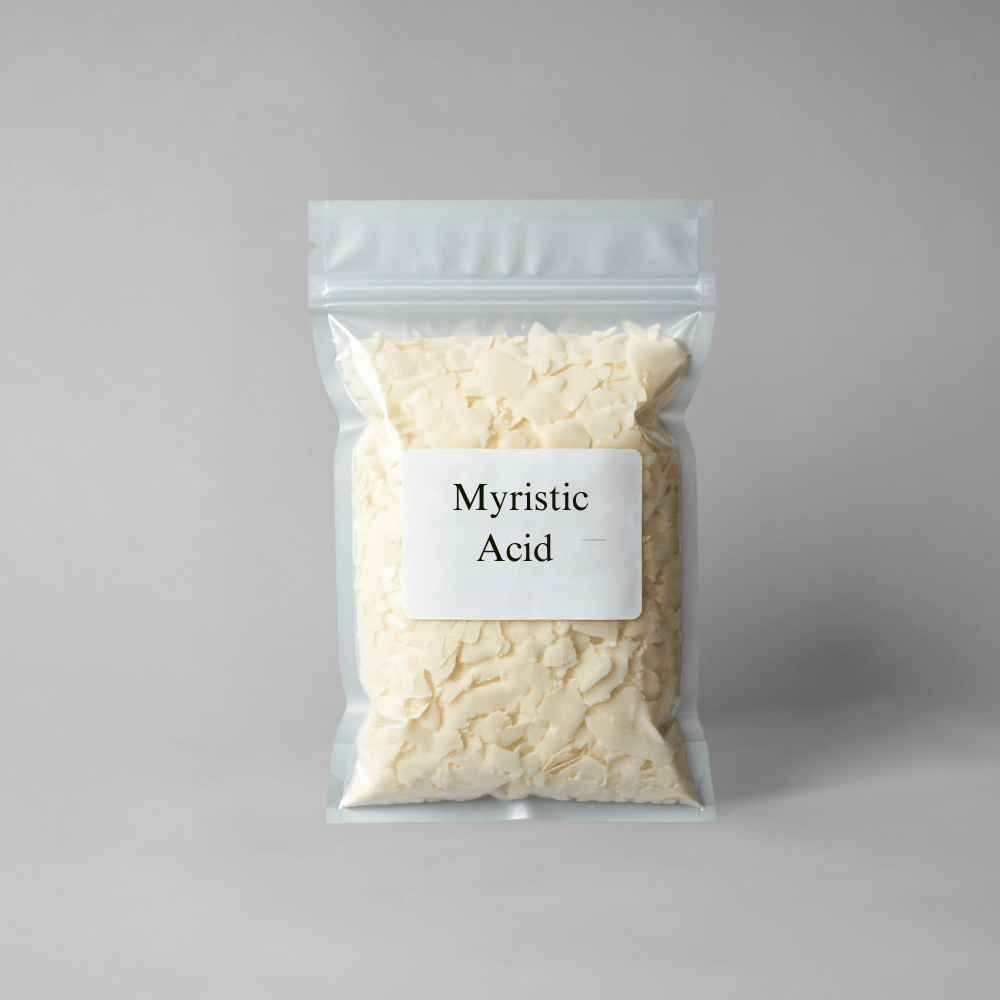
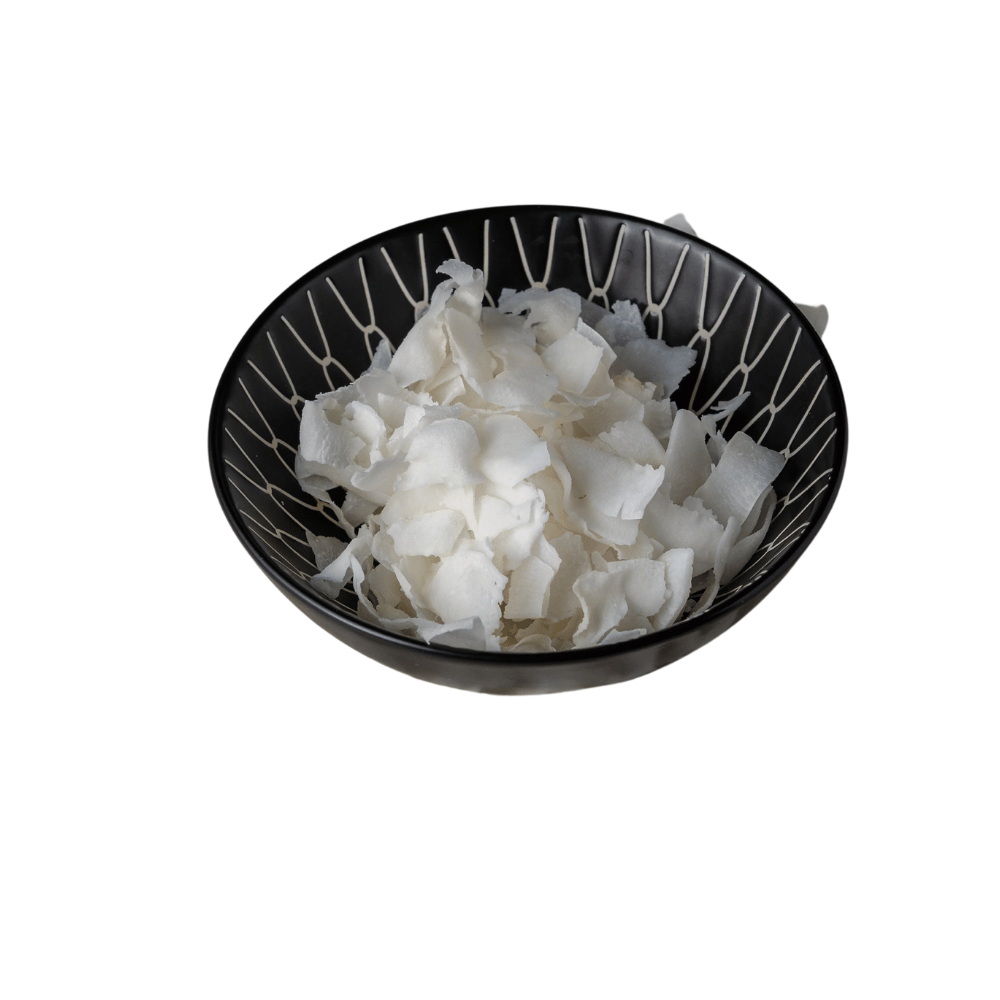


Myristic Acid
Buy Bulk MYRISTIC ACID at Wholesale price in Pakistan. Find Wholesale MYRISTIC ACID from trusted Cosmetics Raw Materials supplier and distributor.
Specifications:
| Product Name | Origin | Shelf Life | Usage |
|---|---|---|---|
| Myristic Acid | China | 24 months | Emulsifier, Moisturizer, Stabilizer |
Specifications
Description
Wholesale Myristic Acid Supplier – Bulk Price in Pakistan
MYRISTIC ACID (Tetradecanoic Acid), a naturally occurring saturated fatty acid, is derived primarily from coconut oil, palm kernel oil, and nutmeg. Widely used in cosmetics and personal care formulations, Tetradecanoic Acid is renowned for its emulsifying, cleansing, and texture-enhancing properties. As a key ingredient in skincare and haircare products, it plays a pivotal role in delivering high-quality end products that cater to consumer demands for performance and sustainability.
Why Choose Myristic Acid for Cosmetic Manufacturing?
1. Emulsifying Power
Tetradecanoic Acid is a highly effective emulsifier, ensuring the stable blending of oil and water in formulations. This property is vital in creating creams, lotions, and balms with smooth and consistent textures.
2. Exceptional Cleansing Properties
As a surfactant, Tetradecanoic Acid effectively breaks down dirt, oils, and impurities, making it a crucial ingredient in facial cleansers, body washes, and soaps. It delivers a deep, satisfying cleanse without being harsh on the skin.
3. Emollient Benefits
Tetradecanoic Acid provides a protective layer on the skin, reducing water loss and promoting hydration. This ensures moisturized, soft, and supple skin, making it ideal for moisturizers and conditioning products.
4. Texture Enhancement
Incorporating Tetradecanoic Acid into your formulations improves the texture, spreadability, and feel of your products. Its use in shaving creams, for example, results in a luxurious lather that consumers love.
5. Compatibility with Natural and Synthetic Ingredients
Tetradecanoic Acid is highly versatile and blends seamlessly with both natural and synthetic ingredients, making it an excellent choice for a broad range of formulations.
Applications in Cosmetics Manufacturing
- Skincare Products: Used in creams, lotions, and face cleansers for its moisturizing and cleansing abilities.
- Haircare Products: Found in shampoos and conditioners as a surfactant and softening agent.
- Soaps and Cleansers: Acts as a base ingredient, improving foam quality and cleansing action.
Key Advantages for Manufacturers
- Cost-Effective Bulk Supply: Purchasing wholesale MYRISTIC ACID ensures a consistent supply at competitive prices, helping you scale production effectively.
- Premium Quality: Our Tetradecanoic Acid meets strict quality standards, ensuring superior performance in your formulations.
- Eco-Friendly Sourcing: Derived from natural sources, Tetradecanoic Acid aligns with the demand for sustainable and environmentally friendly cosmetics.
Complementary Acids for Enhanced Formulations
1. Lauric Acid
LAURIC ACID is known for its potent antimicrobial properties, making it a valuable addition to acne-fighting skincare products. When paired with Tetradecanoic Acid, it enhances cleansing efficacy while maintaining skin hydration.
2. Stearic Acid
As an emulsifier and thickening agent, STEARIC ACID improves the stability and texture of formulations. It complements Tetradecanoic Acid in creams and lotions, adding to their overall richness.
3. Palmitic Acid
PALMITIC ACID serves as an emollient and surfactant, providing a smooth feel and added cleansing power. Its synergy with Tetradecanoic Acid ensures optimal performance in soaps and shampoos.
Specifications
- Name: MYRISTIC ACID
- Origin: China
- Shelf Life: 24 months
- Usage: Emulsifier, Moisturizer, Stabilizer
Why Buy from Us?
As a trusted supplier of raw materials for cosmetic manufacturing, we offer:
- Competitive wholesale prices in Pakistan.
- Guaranteed product quality and purity.
- Reliable delivery and consistent supply to meet your manufacturing needs.
Myristic Acid – Properties, Uses, and Applications
Myristic Acid (also known as tetradecanoic acid) is a naturally occurring saturated fatty acid found in coconut oil, palm oil, and nutmeg butter. It plays a key role in cosmetics, pharmaceuticals, and industrial formulations due to its emulsifying, cleansing, and thickening properties.
What is Myristic Acid?
Myristic Acid is a naturally occurring white crystalline fatty acid, typically showing a saponification range of 243–249. It is widely used in the production of emulsifiers, surfactants, esters, and flavors. Because of its excellent emulsifying and opacifying abilities, it is a valuable raw material in both personal care and industrial products.
Key Properties of Myristic Acid
-
Works as a surfactant, cleansing, and thickening agent
-
Provides good emulsifying and opacifying properties
-
Helps improve texture and stability of formulations
-
Can be added to the oil phase or surfactant phase of formulations
-
Typical usage level ranges between 0.5% to 10%
Common Uses of Myristic Acid
Myristic Acid is a versatile ingredient with applications in multiple industries:
-
Personal Care Products
-
Soaps & cleansing bars
-
Creams and lotions
-
Hair conditioners
-
Shaving creams & foams
-
-
Industrial & Chemical Applications
-
Emulsifiers
-
Nonionic & anionic surfactants
-
Esters and flavors
-
Why is Myristic Acid Important?
The demand for Myristic Acid is continuously growing because it not only enhances product stability but also provides cleansing and foaming benefits. This makes it an essential ingredient in skincare, haircare, and hygiene formulations.
MYRISTIC ACID | MACKING COSMETIC
Myristic Acid: An Overview
MYRISTIC ACID, also known by its chemical name tetradecanoic acid, is a saturated fatty acid commonly found in various natural sources such as coconut oil, palm oil, and nutmeg butter. These oils are particularly rich in MYRISTIC ACID. This compound is frequently utilized as a key ingredient in the manufacturing of emulsifiers, both anionic and nonionic surfactants, as well as esters and flavorings. MYRISTIC ACID has a saponification value ranging from 243 to 249.
Benefits
MYRISTIC ACID is widely utilized for its surfactant qualities, making it effective in cleansing formulations. It also functions as a thickening agent, contributing to the viscosity of products. Additionally, MYRISTIC ACID offers notable emulsifying and opacifying properties, which help blend ingredients smoothly and enhance product appearance.
Usage:
MYRISTIC ACID Incorporate MYRISTIC ACID into the oil phase of your formulation or combine it with surfactants. Recommended usage levels range from 0.5% to 10%. For topical application only.
Final Thoughts
Whether you are in the cosmetic, pharmaceutical, or chemical industry, Myristic Acid is a highly valuable ingredient due to its multifunctional properties. Its wide usage in everyday personal care products makes it one of the most important fatty acids in commercial applications.
Order Now
Transform your formulations with premium MYRISTIC ACID. Contact us today to place your bulk order and elevate your cosmetic products to new heights!
🌿 Benefits & Uses
🌿 Benefits & Uses
Health & Wellness Benefits
Scientifically supported benefits
-
Skin conditioning & emolliency: Myristic Acid (C14:0) reinforces surface lipids to reduce TEWL, leaving skin softer and smoother.
-
Foam and cleanse support: When neutralized, it yields dense, creamy lather—a classic feature in shaving creams and cleansing bars.
-
Texture enhancement: In emulsions, it improves viscosity, slip, and body, creating a silky finish in face/body creams.
-
Barrier support: Adds richness to the oil phase, helpful for dry climates across Pakistan.
Traditional and historical uses
-
Occurs naturally in coconut/palm kernel oils used traditionally in soapmaking for hard bars + stable lather.
-
Long used in shaving soaps/creams to deliver cushion and glide—often alongside Stearic Acid.
Mechanism of action (how it works)
-
Saponification: Reacts with alkalis (e.g., Potassium Hydroxide / Sodium Hydroxide) to form myristate soaps (surfactants) that lift oils/impurities.
-
Lipid reinforcement: Integrates into oil phases to reduce evaporation and enhance smoothness.
-
Rheology: Above its melt (~53–56 °C) it helps build viscosity and opacify emulsions as it crystallizes on cooling.
Skin, hair, and cosmetic benefits
-
Skin: Softness, glide, and creamier texture in lotions, body butters, and balms.
-
Hair: In conditioning systems, can enhance slip/combability with cationics.
-
Cleansing: Converted to myristate soaps, boosts thick, stable lather.
Key properties
-
Emollient, opacifier, foam booster, viscosity modifier, soap hardener—especially with Stearic Acid, Cetyl Alcohol, and Emulsifying Wax.
Practical Applications & Uses
Cosmetics & personal care
-
Creams/lotions (0.5–3%): Melt into oil phase at 55–65 °C to add body/slip. Pair with Cetyl Alcohol for structure.
-
Shaving creams (1–4% fatty acid): Neutralize with TEA/KOH for rich, cushioning foam; see Potassium Hydroxide.
-
Bar soaps (3–10% of total fatty acids): Improves hardness & lather with Stearic Acid.
-
Balms/sticks (0.5–2%): Adds structure without waxy drag; balance with Isopropyl Myristate for lighter feel.
Food & beverage
-
Used upstream as an industrial intermediate rather than a retail additive. Follow PSQCA/food-grade regulations if applicable (don’t market ingestible claims for cosmetic grade).
Pharmaceutical/nutraceutical (industrial)
-
Precursor to myristate esters (e.g., IPM) used as emollients/solvents in topical Rx/OTC—grade and compliance required.
Home & DIY
-
Cold/Hot process soaps: Include in oil blend for hard bars.
-
DIY shaving cream: Carefully neutralize (monitor pH).
-
Balms: Blend with Shea analogs/waxes via Emulsifying Wax.
Aromatherapy
-
Not an essential oil; acts as a structurant/carrier-phase for EO balms.
Traditional medicine
-
Indirectly via coconut/palm soaps; avoid medicinal claims for the pure fatty acid.
Industry-Specific Applications
Manufacturing & industrial
-
Intermediates: Production of myristate esters (e.g., Isopropyl Myristate), metallic soaps, surfactants.
-
Personal care: Opacifier/emollient in creams, foam booster in shaving/cleansers.
-
Soap noodles: Enhances mold release, hardness, lather.
Recommended concentrations
-
Emulsions: 0.5–3% (oil phase).
-
Shaving creams: 1–4% (neutralized).
-
Bar soap: 3–10% of total fatty acids.
-
Balms/sticks: 0.5–2%.
Compatibility & stability
-
Works with fatty alcohols (Cetyl/Cetearyl), Stearic Acid, Emulsifying Wax, non-ionic emulsifiers (Category), and antioxidants (Vitamin E Oil).
-
Insoluble in water; soluble in oils/alcohols. Avoid strong oxidizers.
Processing & temperature
-
Melt: ~53–56 °C; process 55–70 °C in oil phase.
-
For in-situ soap systems, target finished pH per product: leave-on ~5.0–6.0, rinse-off 5.0–6.5 (verify with calibrated meter).
Synergy
-
With Stearic Acid → denser foam/viscosity.
-
With Cetearyl Alcohol → structure + cushion.
-
With Isopropyl Myristate → lighter, fast-spreading feel.
⚠️ Side Effects
⚠️ Side Effects
Common Side Effects
-
Mild irritation (uncommon): transient redness, dryness, or stinging—more likely at higher concentrations or with compromised skin.
-
Comedogenic potential (variable): may clog pores in acne-prone users if used at high levels/occlusive bases.
-
Timeline: irritation within minutes–hours; congestion over days–weeks.
-
Duration: usually resolves 24–72 hours after stopping exposure.
-
Management: rinse with lukewarm water; drop to ≤1% in leave-ons; lighten with Isopropyl Myristate; moisturize.
Serious Side Effects & Warnings
-
Rare allergy: hives, swelling, wheeze—discontinue immediately.
-
Alkaline burn risk from improper neutralization in DIY (high pH) — seek medical advice.
-
Eye exposure: rinse 15 min with clean water.
-
Ingestion (cosmetic grade): not intended—seek emergency care.
-
Stop use if blistering, persistent burning, or worsening acne occurs.
-
Emergency: breathing difficulty, facial swelling, severe dizziness → urgent medical attention.
Risk Factors & Individual Sensitivity
-
Higher risk: acne-prone/oily skin, active dermatitis, damaged barrier.
-
Conditions: eczema/psoriasis—patch test recommended.
-
Age: children’s skin is more reactive—use conservative levels.
-
Formulation factors: high % fatty phase, high pH, or occlusives elevate risk.
-
Disclaimer: Educational only; consult a healthcare professional for personal advice.
Precautions & Interactions
Precautions & Interactions
General Precautions
-
Avoid/limit use if you have known sensitivity to fatty acids or persistent acne unresponsive to care.
-
Pregnancy/breastfeeding: topical cosmetic use generally low risk; avoid nipple area and consult a professional for leave-ons.
-
Children/elderly: start at lower concentrations.
-
Dermatitis/wounds/severe acne: use cautiously and patch test first.
-
Allergy/sensitivity: 24-hour patch test on forearm/jawline.
-
Formulation caution: ensure correct neutralization/pH in DIY or manufacturing; if making soaps, use KOH or NaOH responsibly.
Drug & Supplement Interactions
-
Topical Rx/OTC: as an emollient it has no direct pharmacologic interaction, but myristate esters can enhance penetration—separate prescription topicals by 30–60 min.
-
OTC acne actives (BPO/SA): heavy/oily systems may counteract goals—prefer lighter bases or add Isopropyl Myristate.
-
Anticoagulants/antihypertensives: no known systemic interactions in topical cosmetic use; do not ingest cosmetic grade.
-
Herb/supplements: none known for topical cosmetic use; still patch test.
-
Timing: apply drug products first, then emollient formulas containing Myristic Acid.
Handling & Storage Safety
-
PPE: gloves, goggles, lab coat; avoid dust inhalation.
-
Storage: cool, dry, sealed; target 15–30 °C; away from heat/sunlight.
-
Processing: melt 55–70 °C in oil phase; use stainless vessels; control pH when neutralizing with KOH or NaOH.
-
Contamination prevention: dry utensils; nitrogen blanketing for long holds; add antioxidants like Vitamin E Oil if needed.
-
First aid: skin—wash; eyes—rinse 15 min; inhalation—fresh air; ingestion—seek care.
-
Disposal: follow municipal/EPA guidance; avoid drain disposal of bulk fatty materials.
Dosing & Instructions
Dosing & Instructions
Dosage Guidelines
-
Leave-on creams/lotions: 0.5–3% in oil phase (start 1%). Pair with Cetearyl Alcohol for richer body.
-
Shaving creams (TEA/KOH neutralized): 1–4% fatty acid for foam/cushion; base with KOH.
-
Bar soaps: 3–10% of total fatty acids to boost hardness/creaminess with Stearic Acid.
-
Balms/sticks: 0.5–2% for structure; lighten with Isopropyl Myristate.
-
Max guideline: ≤5% in leave-ons unless validated by testing.
Application Methods
-
Oil-phase melt: Weigh and melt at 55–65 °C into oil phase until clear.
-
Emulsions: Combine hot phases; homogenize; cool under stir to develop crystalline body.
-
In-situ soap systems: Slowly add TEA/KOH/NaOH while mixing; monitor pH.
-
Dilution & carriers: For balms, blend with Cetyl Alcohol + Emulsifying Wax and a light ester like IPM.
-
Temperature cautions: Avoid >75 °C long holds to reduce oxidation/discoloration.
-
Equipment: stainless beakers, overhead stirrer, homogenizer, calibrated pH meter, thermometer.
Timing, Frequency & Monitoring
-
Best time: apply leave-ons after cleansing (AM/PM).
-
Frequency: daily for leave-ons; as needed for shaving/cleansing.
-
Results: texture benefits are immediate; perceived smoothness in 7–14 days regular use.
-
Monitoring: track pH/viscosity/stability (1/7/30-day checks).
-
Adjustments: too heavy? reduce % or add IPM. Too thin? add Stearic or Cetearyl.
-
Safety: target leave-on pH 5.0–6.0; avoid eye area; patch test.
🌿 Ingredients & Specifications
🌿 Ingredients & Specifications
Active Ingredients & Composition
-
INCI: Myristic Acid (Tetradecanoic Acid)
-
Typical purity: ≥98–99% fatty acid (grade-dependent)
-
Natural occurrence: major saturated FA in coconut/palm kernel oils
-
Role in cosmetics: emolliency, foam structure, viscosity
-
Additives: typically none; optional antioxidants per spec (see Vitamin E Oil for finished goods)
-
Allergens: none added; trace residues per feedstock/refining
Technical Specifications
-
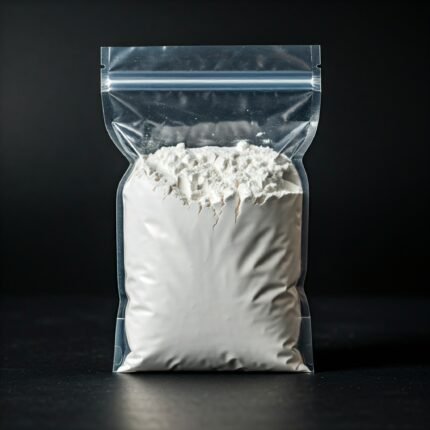
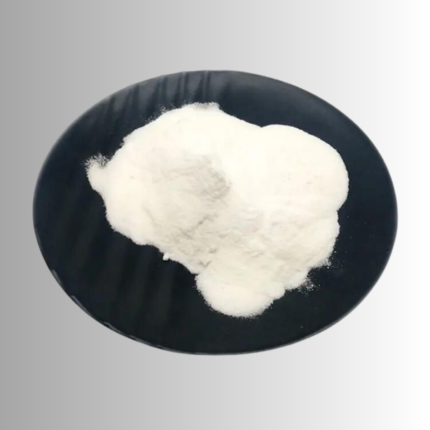
Appearance: white flakes/pellets/powder; Odor: faint, fatty
-
Melting point: ~53–56 °C
-
Acid value / Saponification value: ~245–255 mg KOH/g
-
Iodine value: ≤2 g I₂/100 g
-
Solubility: insoluble in water; soluble in ethanol, isopropanol, oils
-
Micro specs: TPC/yeast/mold within cosmetic limits; heavy metals within spec (see COA)
Quality & Sourcing Information
-
Origin: Derived from coconut/palm kernel fatty acids; RSPO-aligned options on request
-
Processing: fractionation and refining/distillation to cosmetic specs
-
Quality system: batch-tested for purity, AV/SV, moisture, appearance
-
Compliance & docs: COA / MSDS / TDS provided per batch
-
Traceability: batch-numbered packaging; Pakistan warehouse stock for fast dispatch
-
Pack sizes: 1 kg • 5 kg • 25 kg (bulk on request)
-
Related categories: Emulsifiers, Non-Ionic Emulsifiers, Acids
✅ FAQs
✅ FAQs
Product Basics
Q: What is Myristic Acid?
A: A saturated fatty acid (C14:0) used to add foam, structure, and emolliency in cosmetics/soaps.
Q: Is Myristic Acid natural/organic?
A: It’s typically plant-derived (coconut/palm kernel). Organic options depend on supplier certification.
Q: Where does it come from?
A: Fractionated from plant oils; see related Acids.
Q: How is it processed?
A: Fractionation + refining to meet cosmetic specs.
Q: What makes it different from similar products?
A: Shorter chain than Stearic Acid → creamier lather, lighter structure.
Q: What does it look/smell like?
A: White flakes/powder, faint fatty odor.
Q: Is it vegan/cruelty-free?
A: Plant-derived; confirm supplier declarations if needed.
(Add FAQ schema to each Q&A.)
SECTION 2: Usage & Application (10–12 Q&As, ≈270 words)
Q: How do I use it in lotions?
A: Melt into oil phase 55–65 °C at 0.5–3%, then emulsify with Emulsifying Wax.
Q: How much for shaving cream?
A: 1–4%, neutralized with TEA/KOH.
Q: Can I use it every day?
A: In finished products, yes—patch test first.
Q: How long to see results?
A: Immediate texture; 1–2 weeks for perceived smoothness.
Q: Can I mix with other oils?
A: Yes—pair with Isopropyl Myristate for lighter feel.
Q: Best time to use?
A: After cleansing; shaving products during shave.
Q: Do I need to dilute?
A: Use within a formulation (not neat on skin).
Q: Is it okay for sensitive skin?
A: Start low (~1% in leave-ons) and patch test.
Q: How do I apply to hair/skin?
A: Via finished lotion, balm, or soap—see Emulsifiers.
Safety & Quality
Q: Safe in pregnancy?
A: Topical cosmetic use generally low risk; consult your doctor.
Q: Any side effects?
A: Possible irritation/comedogenicity at high levels—see Side Effects tab.
Q: Who should avoid?
A: Highly acne-prone or very sensitive users (keep % low).
Q: How to patch test?
A: Test the finished product behind ear/forearm for 24 h.
Q: Storage & shelf life?
A: Cool, dry (15–30 °C), sealed; typically 24 months unopened (check COA).
Q: Purity tested?
A: Yes—COA/MSDS/TDS available per batch.
B2B Commercial Questions
Q: MOQ?
A: 1 kg standard; 5 kg • 25 kg and drums on request.
Q: Bulk pricing?
A: Tiered discounts—contact sales (Pakistan rates).
Q: COA available?
A: Yes, per batch.
Q: Private label?
A: OEM available.
Q: Shipping/pickup?
A: Nationwide delivery; Lahore pickup available (Bismillah Market, Paper Mandi, Bottle Bazar, Shah Alam).
Q: Tech support?
A: Yes—formulation guidance/stability tips.
Reviews (0)
Shipping & Delivery


Reviews
Clear filtersThere are no reviews yet.